
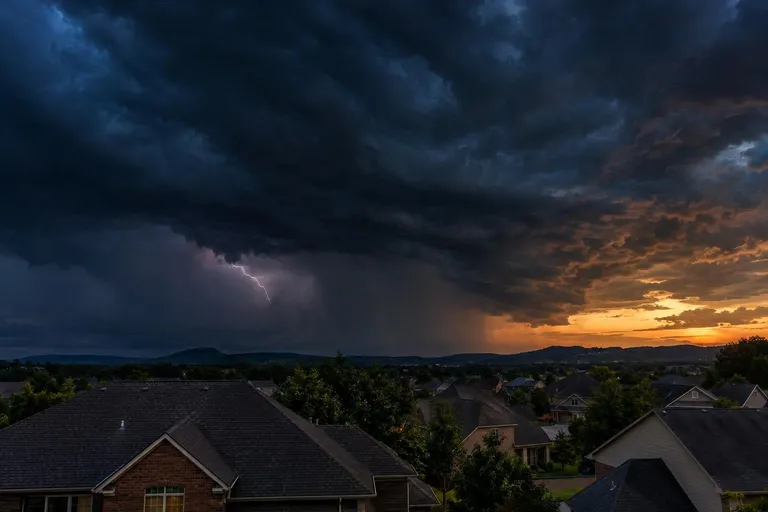
Hail, wind or a fallen limb? Let us investigate the scene
Middle Tennessee storms leave clues that are easy to miss from the ground. We find them while they are still fixable.
What the inspector examines
- Hail bruising, mat fractures and granule displacement
- Wind creasing, lifted and missing shingles
- Dented vents, flashing, gutters and downspouts
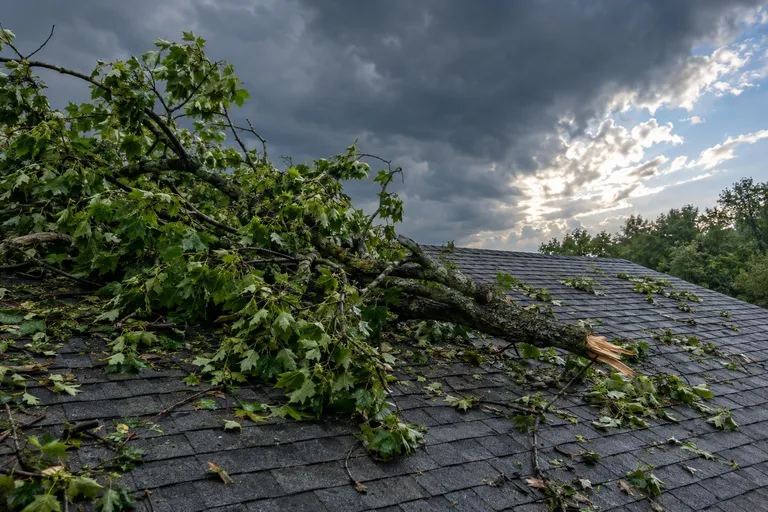
- Impact points from limbs and debris
- Damaged ridge caps and roof edges
- Collateral clues on soft metals and siding
How the investigation works
Hail leaves a pattern: spatter marks and soft metal dents, then bruises in the shingle mat. We read those clues, chart where they are and photograph each one so the story is easy to follow.
- Free inspection
- Photo evidence
- Plain-English notes
- No sales pressure
What lands in your hands
- A photo log of every damage point
- A map of affected roof slopes
- Notes on what is storm damage and what is wear
- Documentation you can share with your insurance company or contractor
Frequently asked questions
How soon after a storm should I call?
As soon as it is safe. Damage can worsen with each rain, and fresh evidence is easiest to document.
Can you tell hail damage from normal wear?
Often yes. Hail leaves random, round bruising and matching dents on soft metals, while wear follows age and exposure patterns.
Do you do the repair?
We are inspectors. Our job is to tell you the truth about your roof so you can decide what to do next.
Related cases

Insurance Claim Roof Inspection
Clear, dated photo documentation of roof conditions to support your conversation with your insurer.
Open this case
Drone Roof Inspection
High-resolution aerial photos of steep, high or delicate roofs, with zero foot traffic.
Open this case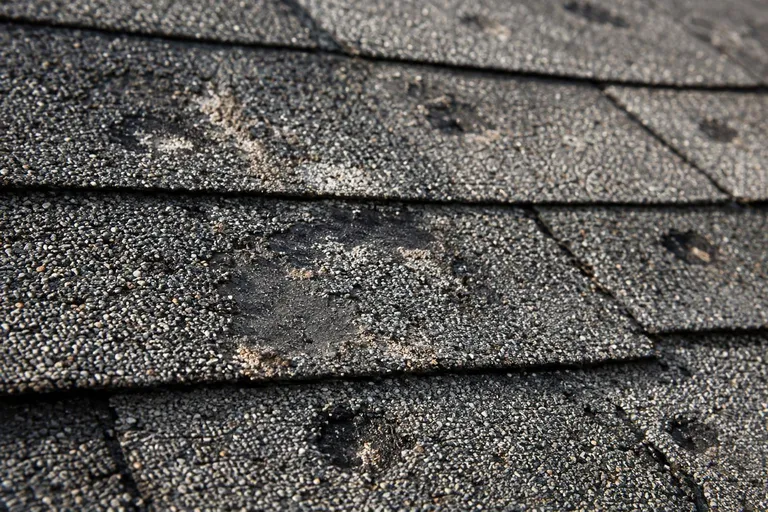
Free Roof Inspection
Our flagship walk-through: roof surface, flashing, gutters and ventilation, documented with photos.
Open this case